
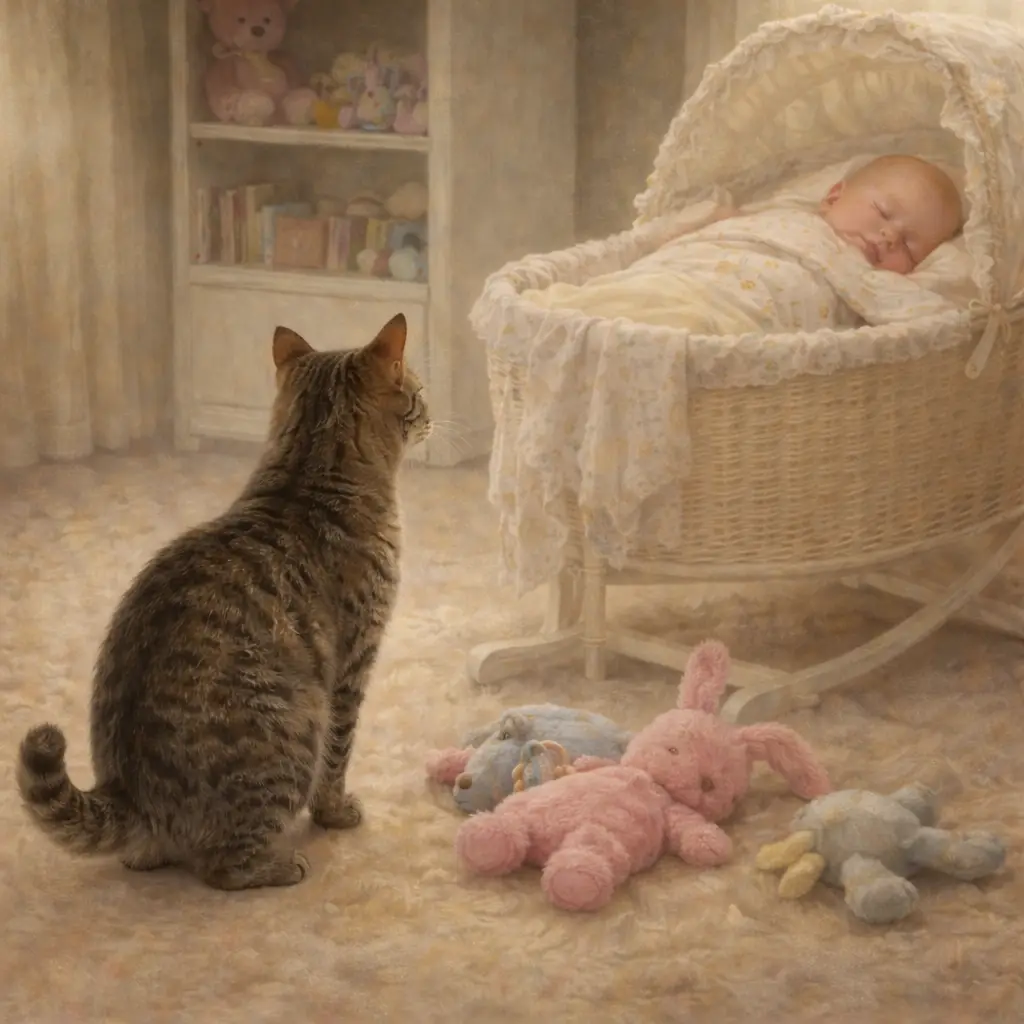
Why Can a Cat Spray Even After Being Spayed?
A client reached out when she was feeling truly exhausted. Her cat, Mourinka, had always been clean, yet she had suddenly begun marking her daughters’ belongings.
The baby’s toys. The older daughter’s bedroom, as she was beginning to move into adolescence.
She never marked the parents’ belongings or their son’s things. Only the daughters’.
Her guardian could not understand why and was beginning to feel desperate.
What Emerged Through Our Connection
As I gently attuned to Mourinka, the first impression came clearly: she was unsettled and responding strongly to the feminine energy within the home.
That became the starting point for our exploration.
Mourinka had been spayed at around a year and a half and had never had kittens of her own. Meanwhile, a baby had joined the family, and the attention that had once belonged to her naturally shifted. She had previously been everyone’s beloved center of attention.
To a person, a new baby and less time for a companion may seem like an understandable change. To Mourinka, it seemed to be a loss of security and of her place within her family and territory.
Why She Began Marking
Animals do not think exactly as we do. Their behavior should not simply be read as spite or revenge. They respond to change.
What I understood Mourinka to be expressing was:
This is mine.
I want to belong here.
Please do not forget me.
The marking was a signal that invited us to look more deeply. She needed to feel her place again in a family that had changed so much in a short time.
What Made the Situation More Difficult
The situation had reached a point where her guardian was considering keeping Mourinka in a single room. She was tired, caring for a small baby, and unable to keep cleaning constantly.
We considered how that restriction might deepen Mourinka’s sense of isolation by reducing the contact and belonging she already seemed to be missing.
What We Changed Together
We began by listening more closely to what Mourinka might need, then introduced small but meaningful steps:
- Offering her mindful attention, even when the children were present
- Involving the older daughter in gentle contact and creating a new bond between them
- Enriching her environment with new activities and toys
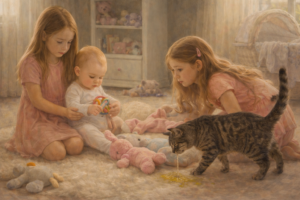
Above all, we wanted her to feel that she was still loved.
Her guardian received a simple invitation: tell Mourinka out loud, sincerely and often.
What Changed
As the family’s approach changed, her guardian reported changes in Mourinka’s behavior. She gradually stopped marking and appeared calmer in the home.
What mattered in this story was the experience of being understood.
What This Story Invites Us to Notice
Our animals’ behavior may draw our attention to what is unfolding within a relationship. Sometimes the message we hear is simply:
I need to be part of your world.
If your animal companion’s behavior changes, or they seem restless or aggressive, there may be something important to explore.
When You Want to Understand Your Animal More Deeply
If your companion has changed and their behavior feels confusing or exhausting, you do not have to explore it alone.
I offer a compassionate space to consider what your animal may be expressing and to nurture a path toward greater calm and harmony. You are welcome to reach out, and together we can look at what is unfolding in your shared relationship.